Imagine walking into a massive warehouse filled with fresh strawberries, spinach, or crisp lettuce. At first glance, everything looks perfect. But inside every single package, a silent biological battle is underway.
Fresh fruits and vegetables continue to breathe after harvest. They naturally consume oxygen, release carbon dioxide, deplete their internal sugars, and age with every passing hour spent in the supply chain. A lot of myths surround how to control this process using MAP (Modified Atmosphere Packaging). It's time to take a closer look and answer one core question: instead of choosing between artificially controlling nature and letting it work on our terms, how can we combine both to achieve the perfect balance?
Two Worlds of Modified Atmosphere Packaging (MAP) – One Goal: Slow Down Time
When entering the realm of MAP technology, the distinction between active MAP and passive MAP refers to how the atmosphere is created: whether we artificially add gas, or let the product build it up naturally through respiration. Ultimately, the nature of the product decides which method fits best.
1. Active MAP: Gas Flush and Instant Protection
Picture a processing facility for ready meals, cured meats, or cheeses. These products do not respire or do so minimally. There is no time to wait – you need immediate inhibition of microbial growth and a stable environment.
How does it work? The packaging machine replaces the air in the package with a gas mixture (by vacuum and gas injection, or by gas flushing) – typically nitrogen (N₂) and carbon dioxide (CO₂) to aggressively inhibit bacterial and mold growth. The package is sealed instantly.
Where does it make sense? This method is widely used for non-respiring products like meat, poultry, dairy, and bakery items.
Note: Active MAP is also frequently used for fresh produce, such as an N₂ gas flush on fresh-cut salads, to quickly establish a modified atmosphere – though it is important to remember that these products still respire.
2. Passive MAP & EMAP: Letting Nature Take the Reins
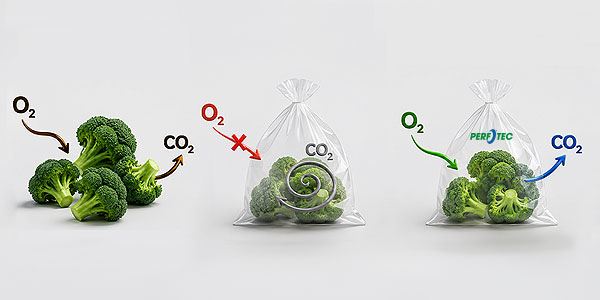
For delicate, respiring products like fresh blueberries, herbs, or whole broccoli, nature takes the lead. Seal them inside an airtight package designed for meat, and within a day they will run out of oxygen and start to ferment.
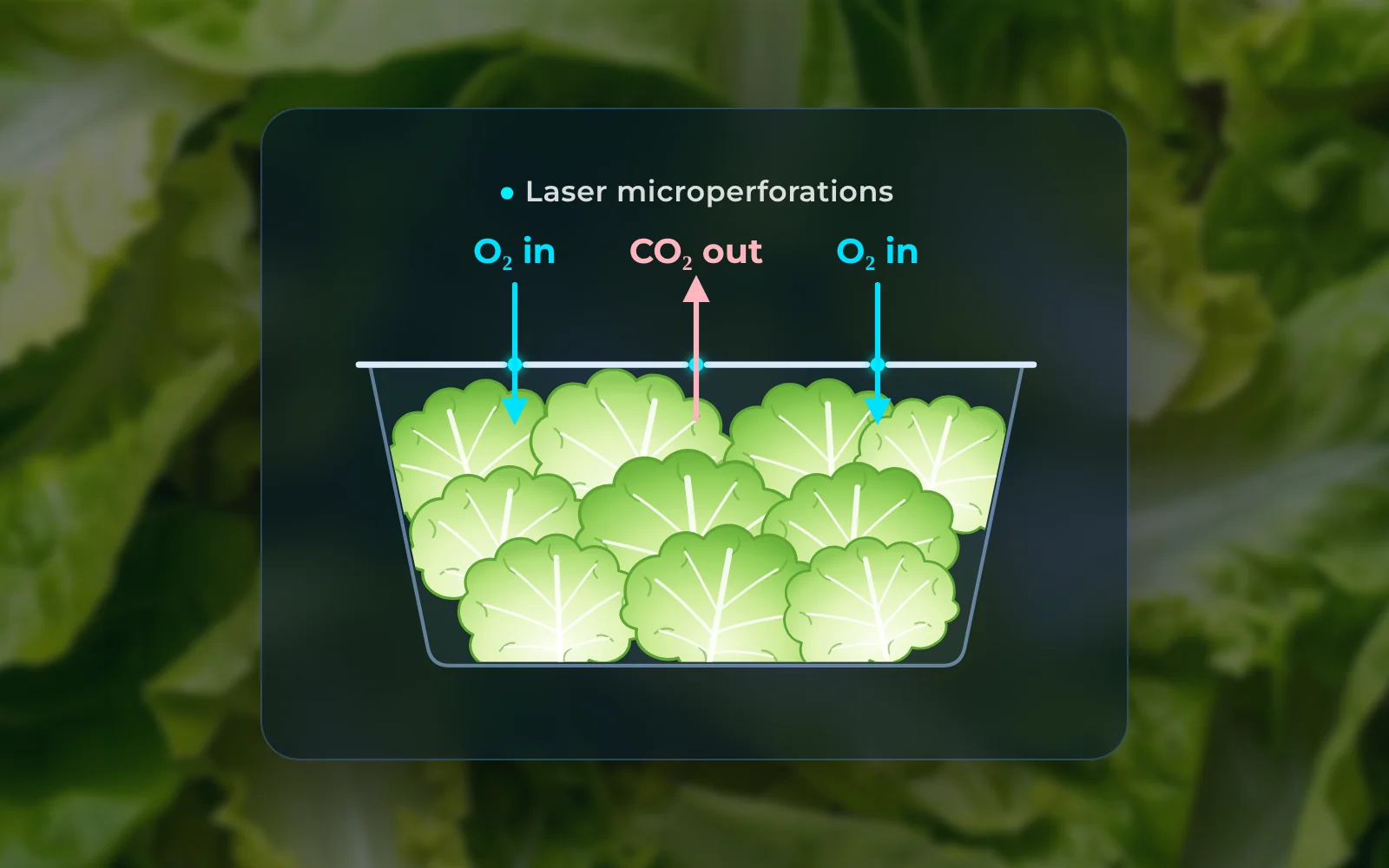
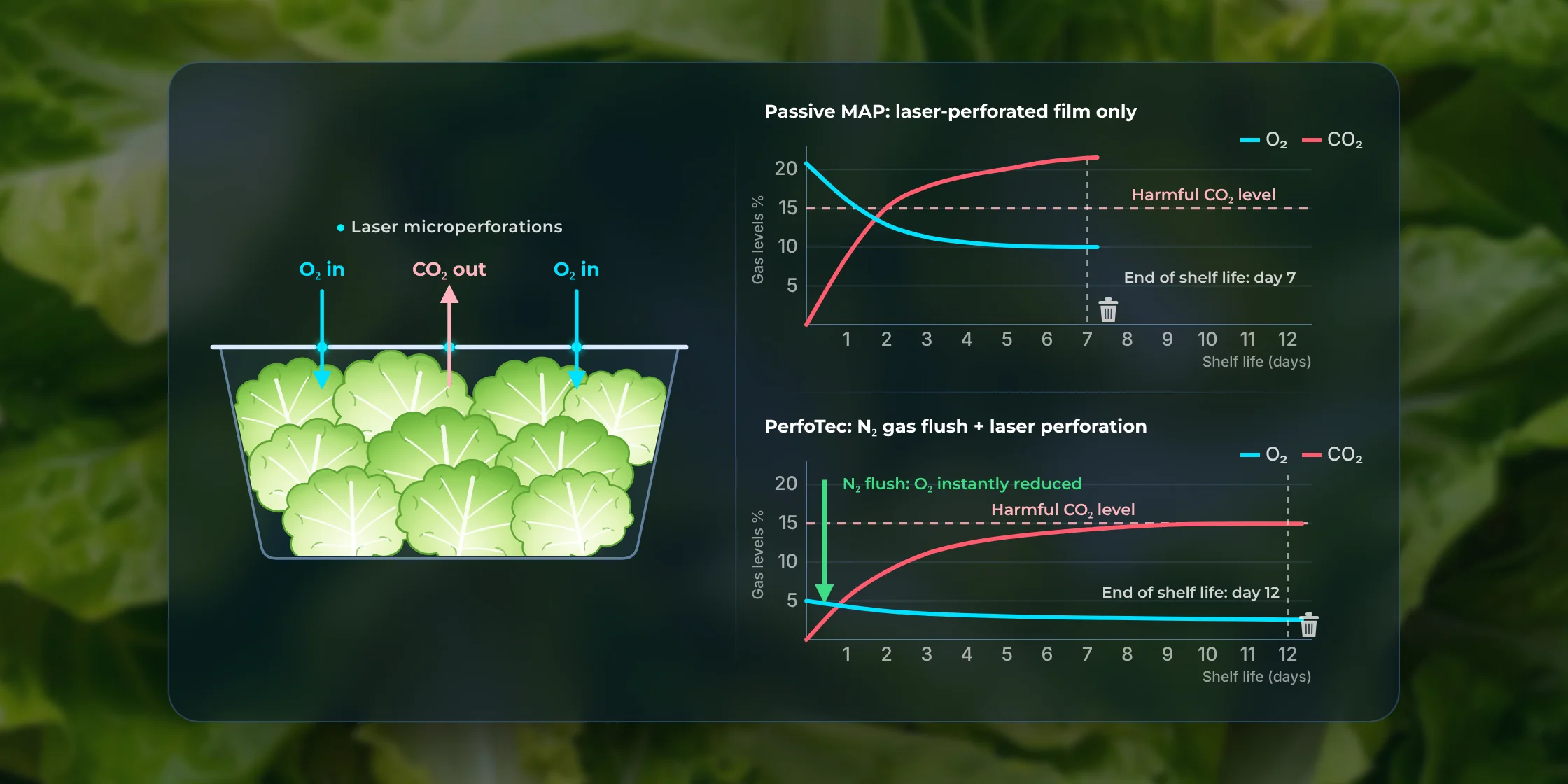
How does it work? In passive MAP, no gas is added; the atmosphere is created only by the respiration of the product. The living produce consumes oxygen inside the package and generates CO₂. MAP that is designed to reach a stable equilibrium state – where gas exchange through the film perfectly matches the respiration rate of the produce – is called EMAP (Equilibrium Modified Atmosphere Packaging).
What's the catch? Guesswork. Standard film has fixed permeability. Yet the very same variety of strawberries respires differently in May after a rainy week than it does in scorching August heat. If the film is too barrier-heavy, the produce suffocates anaerobically. If it is too breathable, it wilts quickly.
How to Package Fresh Produce Without Guesswork: The PerfoTec Approach
This is where theory meets practice – the exact gap we bridge at PerfoTec. Because every batch of produce respires differently, traditional passive MAP can be a gamble (leading to standard supply chain losses of 15% to 30% due to spoilage or dehydration). We replaced guesswork with precise measurement and dynamic film customization.
Here is how a modern, intelligent supply chain operates in practice:
- Measuring the Respiration Profile: Instead of relying on generic lookup tables, a sample of produce is placed in the Fast Respiration Meter (FRM 4.0). Within just 4 hours, the system analyzes the exact oxygen demand of that specific batch at actual transit temperatures.
- Precise Laser Microperforation: Based on the respiration data, the system calculates the ideal perforation pattern. Instead of storing hundreds of film rolls with different specifications, laser microperforation is applied to create micro-holes precisely tailored to the respiration needs of the fresh produce.
- Automated Quality Inspection: Every single perforation is inspected in real time by a patented verification camera, ensuring the internal microclimate matches the exact needs of that specific fresh produce.
- Optional Gas Flush (O₂Control): To help reach equilibrium faster in the first 2 days after packing, a gas flush system like PerfoTec O₂Control can be used on the packing day. This means the PerfoTec approach can be a powerful combination of active and passive: using a gas flush to quickly establish the right atmosphere, and laser microperforation to maintain it. Ultimately, the goal is EMAP – reaching the equilibrium atmosphere, whether achieved passively by respiration alone or accelerated with a gas flush.
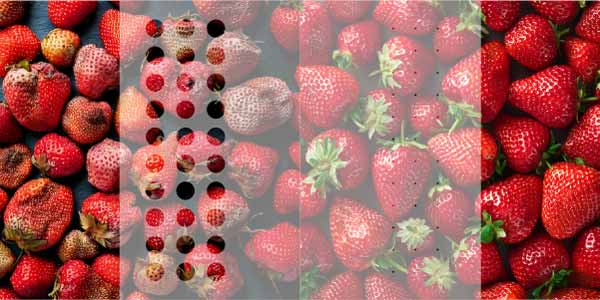
Real-world impact: Take fresh strawberries as an example. While standard packaging without atmosphere control (such as open punnets or macro-perforated films) limits their shelf life to just 3–4 days, data-driven laser microperforation extends their optimal freshness to 7–10 days, slashing waste rates to below 5% and opening up doors to long-distance export.
Technology Comparison: Active MAP vs. EMAP
| Feature | Active MAP (Meat, Dairy, Ready Meals) | EMAP (PerfoTec Approach – Produce) |
|---|---|---|
| Mechanism | Replacement of air with a defined gas mixture (CO₂/N₂) added at packing | Natural produce respiration + laser microperforation (optional gas flush to accelerate) |
| Response Time | Instant protection at the moment of sealing | Achieves gas equilibrium during storage (faster with gas flush) |
| Target Application | Meat, poultry, cheeses, ready-to-eat meals | Fresh produce |
| Core Philosophy | Creating a stable, fixed protective atmosphere | Adapting the film to maintain equilibrium for living produce |
Freshness Isn't Luck: It's Precision Science
Whether you seal steaks with gas injection using active MAP or extend the shelf life of delicate raspberries with laser microperforation (EMAP), the conclusion is clear: the modern food industry has no room for costly errors or food waste caused by poorly matched packaging.
Instead of relying on intuition, ground your process in real respiration data and technology that adapts dynamically to nature.
Looking to Reduce Fresh Food Supply Chain Losses?
Discover how optimized packaging and respiration measurement can extend the shelf life of your produce from 3–4 days up to 7–10 days while cutting waste.